earth online
  • Explore Missions
    • Earth Explorers
    • Heritage Missions
    • Third Party Missions
  • Explore Data
    • All Data
    • Open Data
    • Announcement of Opportunity
    • Project Proposal
    • Sample Data
    • Dashboard
  • Explore Tools
    • Analysis Tools
    • Processing Tools
    • Visualisation Tools
    • Catalogues
    • Apps
  • Explore News & Events
    • All News
    • Data Release News
    • Maintenance News
    • Operational News
    • All Events
    • Events Updates
    • Workshop
    • Conference
  • Explore Learn & Discover
    • Data Application Articles
    • Spotlight on EO Community
    • Gallery
    • FAQ
    • Success Stories
    • Infographics
    • Quality Reports Advanced Search
  • SEE ALL
  • PROBA-1
  • PROBA-1
  • Mission
    • PROBA-1 Overview
    • PROBA-1 Objectives
  • Instruments
    • CHRIS
      • Explore CHRIS
      • CHRIS Overview
    • HRC
      • Explore HRC
      • HRC Overview
  • Data
  • PROBA-1
  • Mission
    • PROBA-1 Overview
    • PROBA-1 Objectives
  • Instruments
    • CHRIS
      • Explore CHRIS
      • CHRIS Overview
    • HRC
      • Explore HRC
      • HRC Overview
  • Data
More
    • Missions
    • PROBA-1
    • Instruments
    • HRC
    • HRC Overview

    HRC Overview

    Instrument Design
    PROBA-1

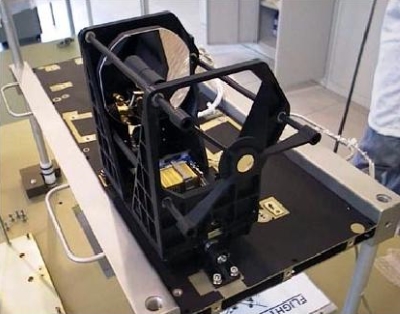
    HRC was a miniaturised black and white imager with 5 m ground resolution. The telescope was of the Cassegrain type with an aperture size of 115 mm and a focal length of 2296 mm. It had a detector based on a CCD (charge coupled device) and used 3D packaging technology. It contained 1024 x 1024 pixels of 14 mm size. The HRC required a highly stable and accurate pointing of its two-dimensional CCD to an Earth-fixed target using the "point and stare" feature of the spacecraft. The field of view (along the diagonal of the detector) was 0.504°. Images were digitised to 10 bits before transmission to the spacecraft.

    HRC provided grey scale images, approximately 25 km square with a pixel resolution of 5 m. It had a spatial resolution of 8 m. The camera had been used by students from selected Belgian schools whose experiment proposals had been accepted under the EDUPROBA project.

    Images of Earth and other data gathered by PROBA-1 were sent to a web server located at the ESA ground station in Redu, Belgium, where scientists were able to access the information over the internet as soon as it was delivered from the satellite.

    Tweet
    Share

    Featured

    • Lake Macleod, Australia: As seen by PROBA-1
      Lake Macleod, Australia: As seen by PROBA-1
    • Celebrating ESA’s first small satellite with science success
    • Workshop celebrates end of long-running PROBA-1 satellite
    • International collaboration: Summarising ESA’s Third Party Missions

    Search with keywords

    • Agriculture
    • Cameras
    • HRC
    • Oceans
    • Passive Remote Sensing
    • Photon/Optical Detectors
    • PROBA
    • PROBA-1

    People also search for

    DataNewsMissionsEventsTools and toolboxesActivitiesCampaignsLearn & Discover
    European Space Agency
    Terms and conditionsCookie NoticePrivacy NoticeContact UsFAQComplaintsLeave feedback