- Odin
- Mission
- Odin Objectives
Odin Objectives
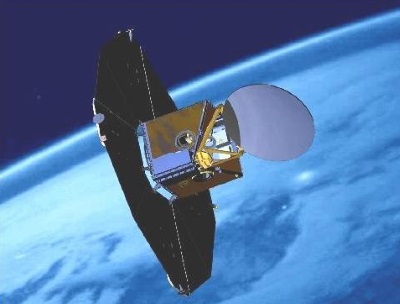
The objectives of Odin were astronomy and aeronomy applications:
- Atmospheric research
- Observation of stratospheric ozone chemistry
- Mesospheric ozone science
- Summer mesospheric science
- Coupling of atmospheric regions
Science
The Odin satellite was an observatory for mm/sub-mm wave spectroscopy, with measurements at wavelengths of 0.5–0.6 mm and 2.5 mm. These contained emission lines from molecules such as water vapour, molecular oxygen, ozone, and carbon monoxide, which were important for the study of atmospheric processes as well as astronomical objects. Complementary information on Earth's atmosphere came from spectral lines at UV and VIS wavelengths. The astronomy objectives and major scientific issues related to star formation processes, interstellar chemistry, and atmospheric ozone balance.
When the Odin project was still in its initial stages, atmospheric researchers discovered that they could use the same instruments to take readings of Earth's atmosphere as astronomers used to study space. Hence, both categories of scientists—aeronomers and astronomers—started working together, and cooperation on Odin began.
In the Odin project, the aeronomers were mostly interested in water, chlorine monoxide, and ozone distributions. The astronomers were mainly interested in water molecules and oxygen molecules (O₂) in space, through observations of line emission from interstellar H2O and O2).